

Table of Contents
- Immediate Steps After a Fire
- How to Document Fire Damage for Insurance
- Notifying Your Insurance Company and Filing Your Claim
- Understanding Your Policy: Coverage, Limits, and Deductibles
- Fire Damage Claim Timeline: What to Expect
- Working with Insurance Adjusters and Public Adjusters
- Fire Insurance Claim Checklist and Dispute Resolution
- Frequently Asked Questions
Last Updated: September 18, 2026
Immediate Steps After a Fire
The first hours after a fire are critical. Your priority is safety, not salvage. Once emergency responders clear the scene, your next moves directly affect damage spread and claim success. Do not re-enter a burning building. Even after firefighters declare the structure safe, resist assessing damage immediately, the building may still be unstable, and smoke, soot, and water create additional hazards.
Contact your insurance company within 24 hours. Many policies require prompt notification, and delays complicate claims. Gather your policy number and property documentation before calling. Your insurer will explain next steps and may recommend a preferred contractor or adjuster.
Secure the property to prevent further damage. Board up windows, cover roof holes, and turn off utilities if safe. This mitigation protects against weather, theft, and secondary water damage. Most policies require reasonable steps to prevent additional loss.
Document the fire’s cause and circumstances while details are fresh. Take photos of the scene before you touch anything, and note the date, time, and any injuries or evacuations. This record helps when filing your formal claim.
How to Document Fire Damage for Insurance
Documentation is the foundation of your insurance claim. Clear records of what was damaged and its value are essential to negotiate fair settlements. Photograph damage, organize inventory with modern tools, and understand the distinct types of damage present.
Photography and Video Documentation
Start photographing immediately, but only after the fire department clears the property. Take wide shots of each room showing the overall extent of damage, then zoom in on specific items. Capture charred walls, damaged furniture, melted appliances, and any personal property affected. Include photos of the exterior if the fire damaged siding, the roof, or landscaping.
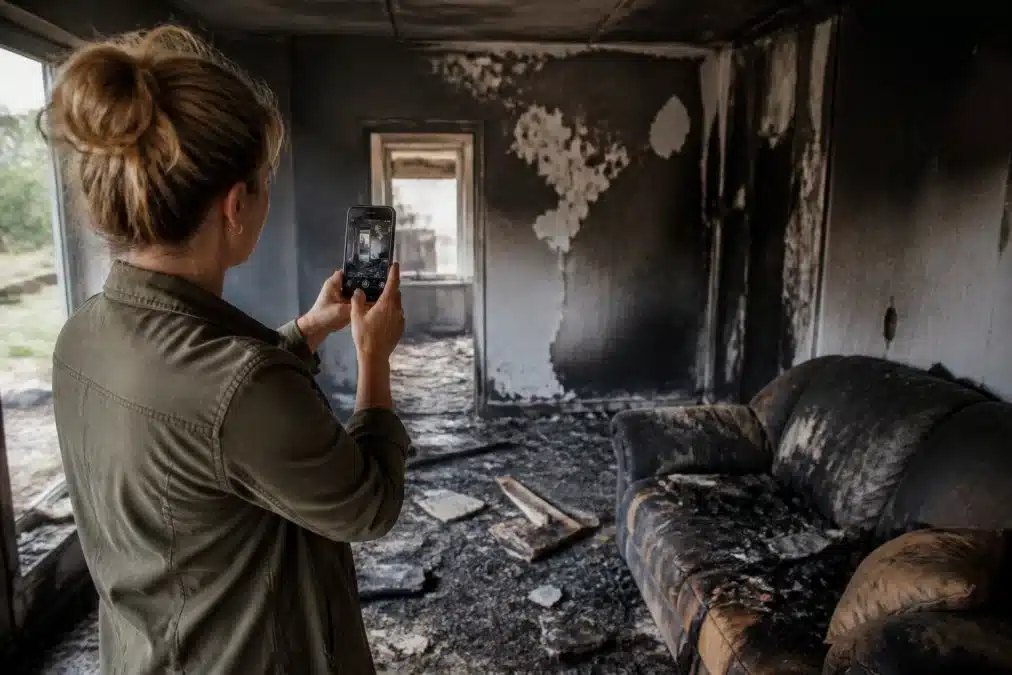
Video walkthroughs are equally valuable. Narrate as you move through the property, describing what you see and what was lost. This creates a time-stamped record that’s harder to dispute than still photos alone. Many smartphones automatically embed timestamps and location data, which strengthens your documentation’s credibility.
Using Digital Inventory Tools
Digital inventory apps streamline documentation. Apps like Encircle or Google Sheets with photo attachments let you photograph items, organize by room or value, attach receipts, timestamp entries, and share instantly with adjusters. Digital tools reduce missed items and help prioritize high-value claims.
Understanding Smoke, Soot, and Water Damage
Fire damage involves multiple types. Understanding each affects claim scope and settlement accuracy. Adjusters sometimes underestimate by grouping damage or missing secondary losses.
Smoke damage discolors walls, ceilings, and contents far beyond the fire’s origin, penetrating HVAC systems and enclosed spaces. Smoke-damaged items may be salvageable through professional cleaning, factor this cost into your claim. Document smoke staining across rooms to show extent of spread.
Soot damage is the black residue from incomplete combustion, concentrated near the fire’s origin but can travel. Soot is abrasive and may require specialized cleaning or result in total loss. Photograph soot buildup on surfaces, electronics, and textiles, these warrant higher remediation costs than smoke staining.
Water damage from firefighting is often the most extensive secondary loss, saturating flooring, drywall, insulation, and contents. Document water pooling, saturation, and water lines on walls. Water damage is often underestimated because wet materials look similar to dry ones in photos until they fail.
Explicitly note which damage is from fire, smoke/soot, or water. This clarity helps adjusters identify if settlement offers account for all three categories. Many low offers result from missing water damage or underestimating smoke remediation costs.
Collecting Receipts and Proof of Purchase
Create a detailed inventory listing each item, age, original cost, and condition. For high-value items, include serial numbers and receipts. Collect receipts and warranties for major items.
Preserving Physical Evidence
Disposing of damaged property before the adjuster inspects it can result in claim denial or significant reduction in your settlement. Even if the items seem worthless, hold onto them until you receive written approval to discard them.
Notifying Your Insurance Company and Filing Your Claim
Call your insurer within 24 hours. Have your policy number, coverage dates, and property address ready. Describe the fire’s cause, date, time, and any injuries. Your insurer will assign a claim number and schedule an adjuster visit.
The proof of loss is your formal claim statement. It must be detailed, well-documented, and submitted within the timeframe your policy specifies. Missing this deadline can delay your settlement significantly.
Understanding Your Policy: Coverage, Limits, and Deductibles
Not all fire damage is covered equally. Your policy’s specific language determines what you can claim and how much you’ll receive.
Fire Damage Claim Timeline: What to Expect
The timeline for how to handle insurance claims for fire damage varies by complexity. Understanding the general progression puts you in control.
Days 1-3: Immediate Notification and Assignment
Weeks 1-2: Adjuster Inspection and Documentation Review
Weeks 2-4: Initial Settlement Offer
Weeks 4-8: Dispute Resolution and Negotiation
How the Appraisal Clause Works:
- Request appraisal in writing. Send a formal letter invoking the appraisal clause.
- Each party selects an appraiser. You hire an independent appraiser; your insurer hires theirs. Both should be licensed and experienced in property damage valuation.
- Appraisers review evidence. Both examine the property, review documentation, and inspect damaged items.
- Appraisers attempt agreement. If they agree, that becomes binding. If not, they select a neutral umpire.
- Umpire makes final decision. The umpire’s decision is binding on both parties.
If you hire a public adjuster, notify your insurance company immediately. Most states require disclosure, and early notification prevents disputes about representation later.
Weeks 8+: Final Settlement
Complex Claims and Legal Action
Working with Insurance Adjusters and Public Adjusters
Your insurance company assigns an adjuster to evaluate your claim, inspect damage, review documentation, and estimate costs. They work for the insurer, so be professional and cooperative. Provide documentation promptly, walk them through the property, point out missed damage, and ask about valuations. Take notes during inspection.
Fire Insurance Claim Checklist and Dispute Resolution
Use this checklist to ensure you’ve covered all essential steps when handling insurance claims for fire damage.
| Step | Purpose | Timing |
|---|---|---|
| Notify insurer | Trigger claim process and assignment | Within 24 hours |
| Secure property | Prevent secondary damage | Within 48 hours |
| Document damage | Create evidence for claim | Within 1 week |
| Create inventory | List all damaged items with values | Within 2 weeks |
| Submit proof of loss | Formal claim filing | Per policy deadline |
| Cooperate with adjuster | Provide access and information | As scheduled |
| Review initial offer | Assess settlement fairness | Within 30 days |
| Dispute if needed | Challenge undervaluation | Within timeframe specified in policy |
| Resolve or escalate | Negotiate or involve public adjuster | Weeks 4-8 |
Frequently Asked Questions
What should I not say during a fire damage insurance claim?
Avoid admitting fault, speculating about causes, or downplaying damage to save money. Don’t say your property was unoccupied for extended periods, as this may affect coverage. Never exaggerate damage either, insurers investigate discrepancies. Stick to facts when communicating with adjusters, and consider having a public adjuster or attorney present during conversations about settlement offers.
How long does it typically take to receive payment after filing a fire damage claim?
Most insurers have 30 days to acknowledge your claim and begin investigation. The full timeline depends on claim complexity, damage assessment, and documentation quality. Simple claims may settle in 30-60 days; complex ones can take 3-6 months. Your policy limits, deductible amount, and how quickly you provide proof of loss significantly affect processing speed. Direct communication with your adjuster helps move things along.
Do I need to hire a public adjuster for my fire damage claim?
A public adjuster can be valuable if your claim is complex, your insurer’s offer seems low, or you lack time to manage the process yourself. They work on contingency (typically 5-10% of the settlement increase) and handle documentation, negotiation, and dispute resolution on your behalf. For straightforward claims with cooperative insurers, you may not need one. Evaluate based on claim size, your comfort level, and whether your insurer is responsive.
What are common reasons fire insurance claims get denied?
Claims are often denied for policy exclusions (such as lack of maintenance), failure to maintain the property, intentional acts, or gaps in coverage. Misrepresentation on your application can also trigger denial. Some denials stem from insufficient documentation or missed deadlines for filing proof of loss. If your claim is denied, review your policy carefully, request a written explanation from your insurer, and consider appealing or consulting a public adjuster to challenge the decision.
How do I document fire damage properly for insurance purposes?
Photograph and video-record all damage from multiple angles before cleanup begins. Create a detailed inventory list with descriptions, approximate replacement costs, and dates of purchase where possible. Keep receipts, warranties, and proof of ownership for high-value items. Document smoke, soot, and structural damage separately. Save all communications with your insurer and adjuster. Digital inventory apps can streamline this process and create organized records that strengthen your claim.
What is the difference between actual cash value and replacement cost value in fire damage claims?
Actual cash value (ACV) reimburses you for the current market value of damaged items, accounting for depreciation. Replacement cost value (RCV) covers the full cost to replace items new, without depreciation deductions. RCV policies typically pay more but have higher premiums. Check your policy to understand which applies to your coverage. This distinction significantly affects your settlement amount, especially for older items or structural components.
What happens if my insurer’s settlement offer seems too low?
Request an itemized breakdown of how the adjuster calculated the offer. Gather independent repair estimates or appraisals to support a higher value. Document any items the adjuster missed or undervalued. Many policies include an appraisal clause allowing you to dispute the amount through a neutral third party. If negotiation stalls, a public adjuster can formally challenge the offer. Bad faith practices by insurers (unreasonable delays or denial) can also be grounds for escalation.