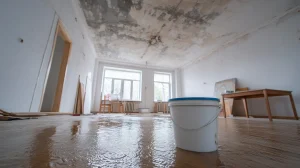


The ideal drying temperature for a flooded building is 70°F to 80°F with indoor relative humidity held below 60%, maintained around the clock until moisture readings return to normal. Warmer air holds and moves more water vapor, dehumidifiers pull that vapor out, and air movers keep wet surfaces evaporating. Mr. Restore runs this process on every water loss in Dallas–Fort Worth, Amarillo and Oklahoma City, with daily logged readings that also document your insurance claim.
📞 Flooded now? Call (877) 631-7576 Water damage restoration service
Drying a flooded building in 30 seconds
- Target temperature: 70–80°F in the wet area. Below 70°F evaporation slows sharply; above about 90°F wood, adhesives and finishes can be damaged.
- Target humidity: below 60% relative humidity, ideally 30–50%, so the air can keep absorbing moisture from materials.
- Why it matters: mold can begin to grow on wet materials within 24 to 48 hours, and drywall, subfloor and framing lose strength the longer they stay wet.
- How long: most residential losses dry in 3 to 5 days; hardwood floors, slab-on-grade concrete and below-grade spaces take longer.
- Standard: the IICRC S500 Standard for Professional Water Damage Restoration, which certified technicians follow to set targets and confirm the structure is dry.
Why 70–80°F Is the Sweet Spot
Drying is evaporation, and evaporation depends on three things working together: warm air, dry air and moving air. Each 20°F increase in air temperature roughly doubles the amount of water vapor that air can hold, so warming a wet room lets the air pull moisture out of drywall, carpet pad and framing faster. Push the temperature too high, though, and you trade one problem for another: hardwood cups and splits, laminate delaminates, drywall paper bubbles and paint off-gasses. The 70–80°F window is where materials give up water quickly without being damaged by the heat itself.
Temperature only works when humidity is controlled. Warm, humid air is saturated air. It cannot take on more moisture, and it can push water vapor into dry materials in the next room. That is why professional drying pairs heat with dehumidification rather than simply turning up the thermostat and opening the windows.
Drying Targets Used on Every Mr. Restore Water Loss
| Condition | Target | Why |
|---|---|---|
| Air temperature in the drying chamber | 70–80°F | Fast evaporation without heat damage to wood, adhesives or finishes |
| Relative humidity | Below 60%, ideally 30–50% | Keeps the air able to absorb moisture; slows mold growth |
| Air movement across wet surfaces | Continuous, one air mover per 10–16 linear feet of wet wall | Breaks the boundary layer of saturated air at the surface |
| Moisture content of framing lumber | Back to the reading of unaffected wood in the same house, typically 12–16% | Confirms the structure is dry, not just the surface |
| Monitoring | Daily readings, logged | Adjusts equipment as conditions change and documents the claim |
Targets follow the IICRC S500 standard and are adjusted for the materials involved and the outdoor weather. North Texas summers and Oklahoma winters call for different equipment mixes.
Temperature and Humidity Have to Be Balanced Together
- Too cold and humid: the classic winter loss. Materials barely dry, and a burst-pipe house that sat at 50°F for a week can still be wet inside the walls. Heaters and dehumidifiers run together.
- Warm and humid: the August storm loss with the windows open. The air is already full of water. Close the building, run refrigerant dehumidifiers, and let the equipment lower the humidity before evaporation can start.
- Warm and dry: the target. Equipment is balanced so the dehumidifiers remove water at least as fast as the air movers evaporate it.
- Too hot: above roughly 90°F, wood flooring, cabinets and trim start to move and crack. A faster dry that ruins the floor is not a faster dry.
The Equipment That Holds Those Conditions
Low-grain refrigerant (LGR) dehumidifiers
The workhorse for homes and offices. They pull water vapor out of warm air efficiently and drain it continuously, keeping humidity in the target range.
Desiccant dehumidifiers
Used for cold spaces, large commercial buildings and dense materials like hardwood and plaster, where very low humidity is needed to finish the dry.
Air movers
High-velocity fans placed to sweep air across wet walls and floors. Without airflow, a thin layer of saturated air sits on the surface and evaporation stalls.
Heaters and heat-drying systems
Bring a cold building up to the 70–80°F window in winter, and speed drying of slabs and subfloors when paired with dehumidification.
Floor-drying mat systems
Pull moisture up through hardwood boards so floors can be saved rather than replaced when drying starts within 24 to 48 hours.
Moisture meters and thermal imaging
Find water behind walls, under floors and above ceilings, and confirm each day that readings are moving toward dry standard.
How Long Does It Take to Dry a Flooded Building?
Most homes reach dry standard in 3 to 5 days once extraction is finished and equipment is set. Timelines run longer when water sat for days before anyone called, when Category 3 water required demolition first, or when the wet materials are dense: hardwood floors, plaster, concrete slabs, and basements or below-grade spaces often need 5 to 7 days or more. The single biggest factor is how fast drying starts. Standing water removed on day one is a 3-day dry; the same water found on day four is a demolition project. Mr. Restore answers live 24/7 and arrives within our 60-minute arrival guarantee for exactly that reason. See our water extraction service and the water damage restoration cost guide for what each stage involves.
What a Homeowner Should Do Before the Crew Arrives
- Stop the source at the shutoff valve or main, and switch off power to wet rooms at the breaker if outlets or the panel are affected.
- Call (877) 631-7576. A live person answers 24/7, and the crew is dispatched immediately.
- Get air moving and the thermostat to the low 70s. Run the HVAC fan if it is safe; do not open windows on a humid day.
- Lift what you can. Move furniture, rugs and boxes off wet floors, and put foil or blocks under wood furniture legs.
- Photograph everything before it is moved. It documents the claim, and Mr. Restore adds moisture maps and daily logs to it.
Do not use a household space heater in a wet room, do not run a consumer fan over standing sewage or floodwater, and do not seal a wet room without dehumidification.
What Customers Say About Our Drying Work
Verbatim excerpts from public Google reviews of Mr. Restore offices. Names and dates as shown on Google.
“During my water loss the effected area was dried using state of the art drying techniques that I've never seen be for. Great equipment and technical know how!”
Jesse Hannah · Google review, Dallas office · January 2025
“We had a pipe burst in a wall cavity that flooded our home, Wes and his team responded quickly and efficiently removed the damaged materials and dried our home in a few days.”
KnightzRealm · Google review, McKinney office · March 2025
Drying Temperature FAQ
What is the ideal drying temperature for a flooded building?
Between 70°F and 80°F, with relative humidity kept below 60%. That range evaporates water from drywall, framing and flooring quickly without the heat damage that starts above roughly 90°F. Certified crews follow the IICRC S500 standard and adjust for the materials and the weather.
Does turning up the heat dry a house faster?
Only with dehumidification. Warm air can hold more moisture, but once it is saturated it stops drying and can push water vapor into dry rooms. Heat is paired with dehumidifiers and air movers, and the temperature is kept under about 90°F to protect wood, cabinets and finishes.
What humidity level prevents mold after a flood?
Keep indoor relative humidity below 60%, and ideally between 30% and 50%, until materials are dry. Mold can begin growing on wet materials within 24 to 48 hours, so drying should start the same day the water is found.
How long does structural drying take?
Most residential losses dry in 3 to 5 days once equipment is set. Hardwood floors, plaster, concrete slabs and basements often take 5 to 7 days or more. Losses that sat for days before drying started take longer and usually need demolition first.
Can I dry a flooded room with box fans and open windows?
Fans help move air, but they do not remove water from the air, and open windows on a humid Texas or Oklahoma day add moisture. Professional drying closes the building, controls temperature and humidity with dehumidifiers, and verifies the result with moisture readings.
How do you know when the building is actually dry?
Moisture meter readings in the affected materials return to the readings of unaffected materials in the same building, usually 12% to 16% moisture content in framing lumber. Mr. Restore logs daily readings and provides them for your insurance file.
Related Guides and Services
Water & flood damage restoration Water extraction & removal Basement flood cleanup Water damage repair in DFW Water damage restoration cost guide What a full-service restoration company does Water damage restoration in Dallas
Water in the Building Right Now? Drying Starts Today.
Live answer 24/7 · 60-minute arrival guarantee · IICRC-certified drying · Direct insurance billing