


Table of Contents
- Why the First Hour Matters in Water Damage Restoration
- Emergency Water Extraction Steps You Need to Know
- Water Damage Drying Process Duration and What Affects It
- Factors Affecting Water Damage Restoration Time
- Water Damage Insurance Claim Timeline and Documentation
- Cleaning, Sanitization, and Secondary Damage Prevention
- DIY vs. Professional Response: When to Call Immediately
- Post-Restoration Maintenance and Long-Term Protection
- Frequently Asked Questions
Last Updated: September 19, 2026
Water damage doesn’t wait, and neither should your response. The first hour after discovering water intrusion is critical, every minute counts in preventing secondary damage, structural deterioration, and additional repair costs. Understanding the emergency water damage restoration timeline helps you act decisively and know what to expect when you call for professional help.
At Mr. Restore, we’ve guided thousands of homeowners and business owners through the restoration process. Our 60-minute arrival guarantee and 24/7 emergency response mean your property gets immediate attention when disaster strikes. Here’s what you need to know about the timeline, the process, and why speed matters.
Why the First Hour Matters in Water Damage Restoration
The first 60 minutes after water damage occurs determine whether you’ll face minor repairs or catastrophic structural failure. Water begins saturating drywall, insulation, and subfloor materials immediately. Within hours, it spreads to areas you can’t see, behind walls, under flooring, and into the foundation.
Secondary damage accelerates rapidly. Wet materials begin to break down. Bacteria and contaminants from Category 2 and Category 3 water sources (sewage backups, flooding) pose serious health risks. Mold can begin developing within 24-48 hours in the right conditions, warmth, moisture, and organic material.
The emergency water damage restoration timeline starts the moment you contact a professional restoration company. Immediate water extraction and removal prevent saturation from spreading deeper into structural materials. Early intervention also protects your insurance claim. Documentation of rapid response demonstrates that you took reasonable steps to minimize loss, which strengthens your position with your insurance adjuster.
Call immediately, don’t wait to see if the water “dries on its own.” Professional water extraction removes moisture that evaporation alone cannot reach, especially from subfloor spaces and wall cavities.
Emergency Water Extraction Steps You Need to Know
Water extraction is the first critical phase of the emergency water damage restoration timeline. This isn’t about mopping; it’s about removing standing water using commercial-grade equipment that household tools cannot match.
Professional water extraction typically follows these steps:
- Assessment and moisture mapping, Technicians use thermal imaging and moisture meters to identify all wet areas, including hidden moisture in walls and under flooring.
- Standing water removal, Submersible pumps and industrial wet vacuums extract standing water from the affected space.
- Carpet and padding extraction, Saturated carpet and padding are removed and disposed of, preventing mold growth in these materials.
- Hard surface drying, Air movers are positioned to begin evaporation on tile, concrete, and wood floors.
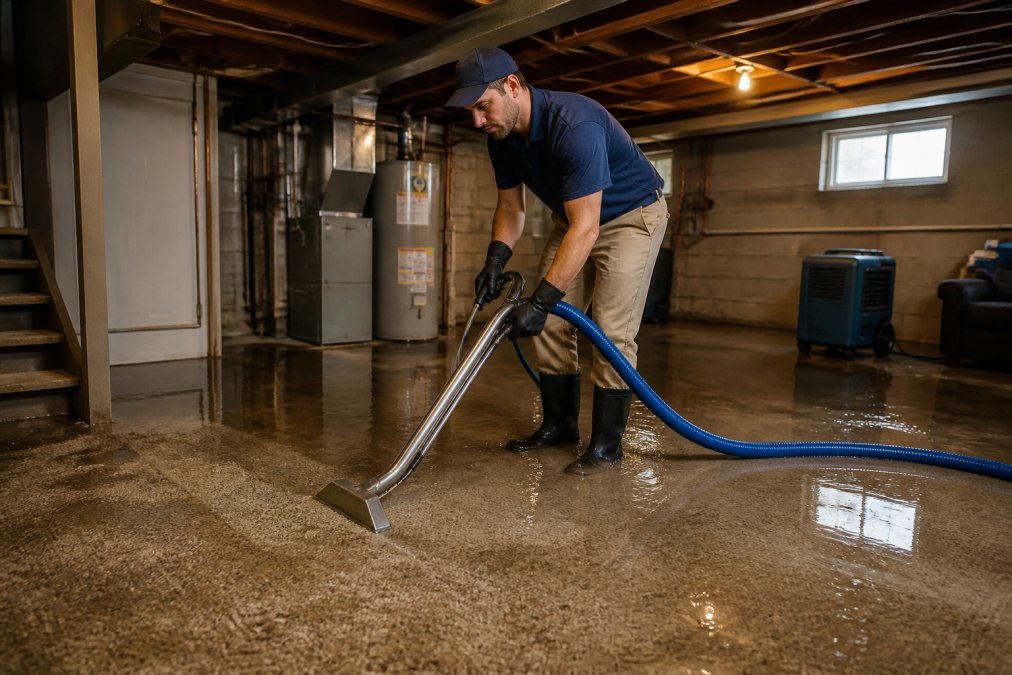
The speed of extraction directly affects your emergency water damage restoration timeline.
Water Damage Drying Process Duration and What Affects It
The drying phase typically lasts 3-7 days for standard water damage, though this varies significantly based on conditions. This is where the emergency water damage restoration timeline extends beyond the first few hours into the days and weeks of active restoration.
Structural Drying and Dehumidification
Structural drying removes moisture from drywall, wood framing, and other building materials. This requires both air movement and humidity control. Air movers circulate moisture-laden air, while dehumidifiers extract that moisture from the air and remove it from the space.
Professional restoration uses two types of dehumidifiers:
- Refrigerant dehumidifiers, Most common for moderate moisture levels; they work like air conditioning units.
- Desiccant dehumidifiers, Used for severe saturation or very cold conditions where refrigerant units are less effective.
Structural drying duration depends on:
- Depth of saturation, Water in drywall takes longer to dry than surface water on hard flooring.
- Material type, Wood absorbs and holds water longer than concrete; insulation holds moisture for extended periods.
- HVAC system status, A functioning HVAC system accelerates drying; a damaged system extends it significantly.
- Ambient conditions, Warm, dry weather speeds drying; cold, humid weather slows it.
Moisture Mapping and Verification
Moisture mapping ensures drying is complete before the restoration moves to the next phase. Technicians use non-invasive moisture meters to measure moisture content in materials at various depths. This data guides decisions about whether to continue drying or proceed to cleaning and reconstruction.
Factors Affecting Water Damage Restoration Time
The emergency water damage restoration timeline isn’t one-size-fits-all. Several factors determine whether your restoration takes 5 days or 5 weeks.
Don’t assume drying is complete because surfaces feel dry. Moisture trapped in walls, under flooring, and in insulation can remain for weeks. Premature reconstruction traps that moisture and creates conditions for mold growth.
Water Damage Insurance Claim Timeline and Documentation
Your emergency water damage restoration timeline is intertwined with your insurance claim process. Professional restoration companies that work directly with insurance adjusters simplify this significantly.
The claim timeline typically follows this sequence:
- Initial call and emergency response (within 60 minutes), The restoration company arrives, assesses damage, and begins water extraction. You file your insurance claim simultaneously or immediately after.
- Insurance adjuster inspection (within 24-48 hours), Your adjuster inspects the property and estimates damage. This inspection informs the scope of restoration work.
- Restoration work authorization (day 2-3), Once the adjuster approves the claim, restoration work proceeds. With direct insurance billing, the restoration company bills your insurer directly, eliminating the need for you to pay out of pocket.
- Ongoing restoration (days 3-14), Water extraction, drying, cleaning, and sanitization proceed while the insurance company monitors progress.
- Final inspection (day 7-14), The adjuster may conduct a final inspection to verify that restoration is complete and meets the approved scope.
- Claim settlement (day 14-30), Your insurance company pays the restoration company (if direct billing) or reimburses you.
Cleaning, Sanitization, and Secondary Damage Prevention
Once structural drying reaches acceptable moisture levels, cleaning and sanitization begin. This phase prevents secondary damage like odor, staining, and bacterial growth.
Cleaning protocols depend on water category:
- Category 1 water, Standard cleaning and deodorization.
- Category 2 water, Antimicrobial treatment to eliminate bacteria and pathogens, plus thorough cleaning.
- Category 3 water, Extensive antimicrobial treatment, disposal of contaminated materials, and specialized cleaning protocols.
Secondary damage prevention includes:
- Odor removal, Water-damaged materials release odors as they dry. Deodorization during the drying phase prevents permanent odor problems.
- Stain prevention, Minerals in water can stain materials. Early cleaning prevents permanent discoloration.
- Bacterial control, Antimicrobial treatment eliminates pathogens before they spread.
DIY vs. Professional Response: When to Call Immediately
The emergency water damage restoration timeline depends on your decision to handle water damage yourself or call professionals immediately.
Call immediately if:
- Water is still standing or actively flowing.
- Water came from a sewage backup, flood, or other contaminated source.
- The affected area is larger than a small bathroom.
- Drywall, insulation, or subfloor materials are saturated.
- Your HVAC system, electrical panel, or other critical systems are affected.
- You have carpet, hardwood floors, or other materials that require professional drying.
- You have health concerns (elderly residents, young children, immunocompromised individuals).
DIY may be appropriate only if:
- The water source is clean (broken pipe, not sewage or flooding).
- The affected area is very small (a few square feet).
- You have extracted standing water immediately.
- You have professional-grade dehumidifiers and air movers available.
- You understand that improper drying can lead to mold and structural damage.
The first 24 hours determine your restoration timeline. Professional water extraction and drying begun immediately can cut your total restoration time in half compared to delayed response.
Post-Restoration Maintenance and Long-Term Protection
Your emergency water damage restoration timeline doesn’t end when the restoration company leaves. Post-restoration maintenance protects your investment and prevents future water damage.
Immediate post-restoration (first 30 days):
- Monitor humidity levels with a hygrometer. Humidity should stay between 30-50%.
- Check for any signs of moisture returning (musty odors, discoloration, soft spots in materials).
- Keep HVAC systems running to maintain air circulation and humidity control.
- Avoid heavy use of the affected area until all materials are fully cured (typically 7-14 days after drying completion).
Long-term protection (ongoing):
- Address the source of water damage. If the damage came from a roof leak, have the roof repaired. If it came from a plumbing issue, have plumbing inspected and repaired.
- Inspect gutters, downspouts, and grading to ensure water drains away from your foundation.
- Maintain your HVAC system to ensure proper humidity control.
- Install water detection sensors in high-risk areas (basements, near water heaters, under sinks).
- Keep emergency contact information for a restoration company accessible. When water damage strikes again, immediate response prevents the cycle from repeating.
Frequently Asked Questions
How long does water damage restoration typically take from start to finish?
The water damage restoration timeline varies based on the extent of damage, category of water involved, and affected materials. Minor water damage may take 3-7 days, while severe structural damage can take 2-4 weeks or longer. The drying process alone typically requires 3-7 days with professional equipment. Immediate action and professional water extraction significantly reduce overall restoration time by preventing secondary damage and accelerating the drying process.
What are the immediate steps to take after discovering water damage?
First, stop the water source if safe to do so. Turn off electricity to affected areas to prevent hazards. Move valuables and furniture to dry areas. Document damage with photos for insurance purposes. Open windows and doors to increase air circulation. Avoid walking through contaminated water if it’s Category 2 or 3 water damage. Most importantly, call a professional restoration company immediately, the first hour is critical to preventing secondary damage, structural deterioration, and health hazards.
What factors affect how long water damage restoration takes?
Key factors include the water damage category (clean water, gray water, or sewage), square footage affected, materials involved (drywall, wood, carpet), humidity levels, temperature, and HVAC system functionality. Structural drying takes longer in humid climates or poorly ventilated spaces. The presence of porous materials like insulation and subfloor increases drying time. Professional assessment using moisture mapping and thermal imaging identifies hidden moisture that determines the actual restoration timeline and prevents incomplete drying.
How does the water damage insurance claim timeline work?
After emergency mitigation begins, a property damage assessment is documented for your insurance adjuster. Professional restoration companies typically handle claim documentation and direct insurance billing, which streamlines the process. Initial claim filing occurs within 24-48 hours of the incident. The adjuster inspects the property and reviews damage documentation. Approval usually takes 3-5 business days. Working with IICRC-certified professionals who understand insurance requirements and maintain detailed claim documentation accelerates approval and ensures coverage for all necessary restoration work.