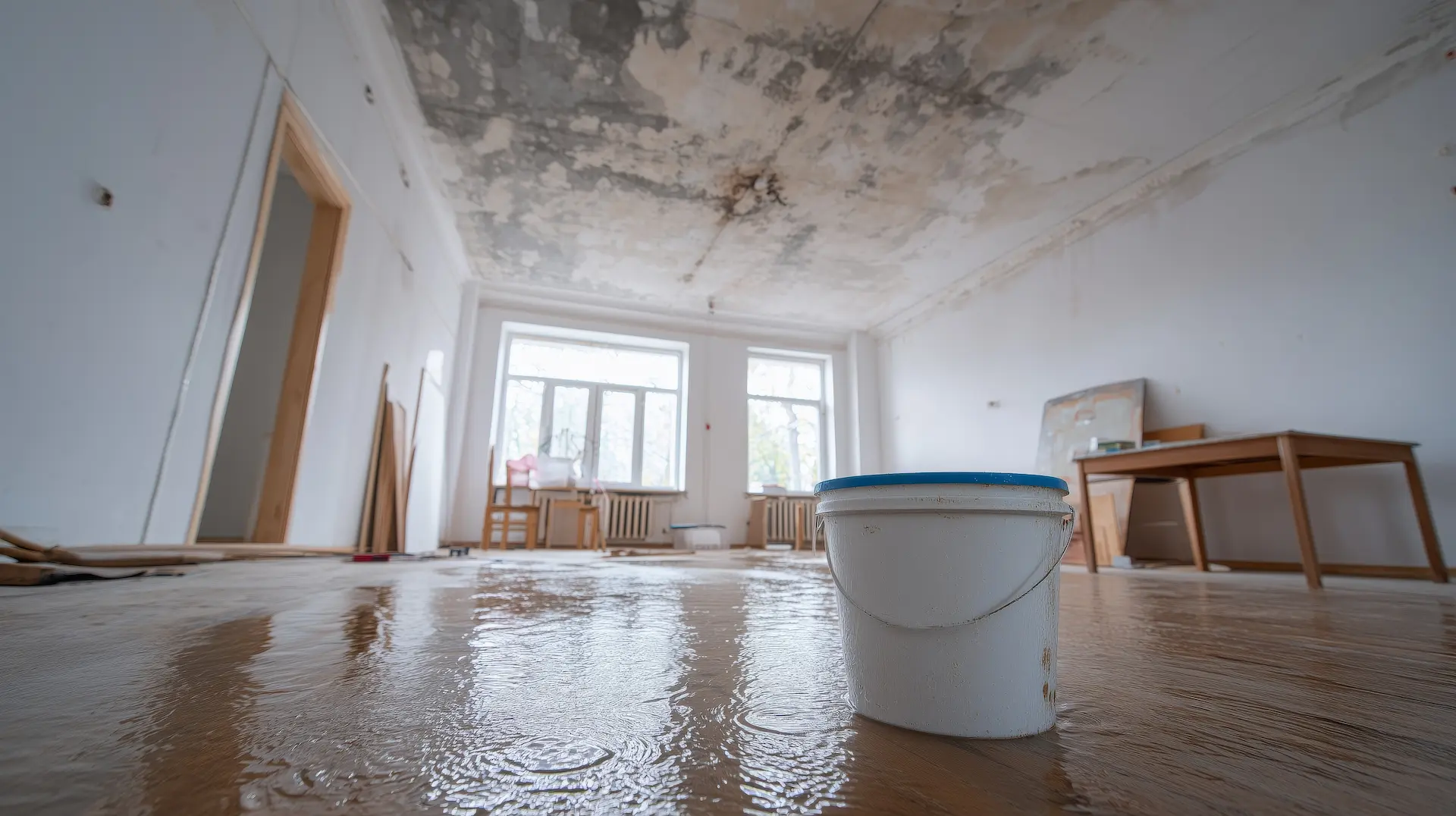

Water Damage Restoration -- 24/7 Emergency Response Across Texas and Oklahoma
If water is in your home or business right now, you have a fixable situation. Mr. Restore has restored 2,500+ properties since 2008. Our IICRC-certified crews dispatch from 5 offices and average a 60-minute guarantee. Read the next 60 seconds of actions, then call.
Right Now -- 5 Actions in the Next 60 Seconds
If water is actively spreading, do these in order before doing anything else.
- Shut off the water source. Find the main water shut-off valve (usually at the perimeter near the meter, or in a garage/utility closet) and close it. If the leak is from a single fixture, just close that fixture's local valve.
- Cut electricity to affected areas. Turn off the breakers serving any room with standing water. Don't touch electrical panels with wet hands or while standing in water.
- Photograph and video everything. Don't move items yet. Insurance carriers want pre-mitigation documentation -- water lines on walls, soaked carpet, damaged contents.
- Lift what you can. Move furniture, electronics, books, and important papers to dry ground. Place foil or wood blocks under furniture legs sitting on damp carpet to prevent stains bleeding.
- Call Mr. Restore at (877) 631-7576. Direct emergency dispatch -- no answering service, no callback queue. Average arrival is 60-minute guarantee.
Water damage restoration is the IICRC S500-defined process of removing water, drying structural materials, and returning a property to pre-loss condition after a water intrusion event. Mr. Restore is a family-owned, IICRC-certified restoration company founded in 2008 that has restored 2,500+ residential and commercial properties across the Dallas-Fort Worth metroplex, the Texas Panhandle, and the Oklahoma City metro. Sitewide average response time is 60-minute guarantee, dispatched from 5 GMB-verified offices. Master emergency dispatch: (877) 631-7576.
What Water Damage Restoration Actually Involves
Water damage restoration is not the same as water cleanup. Cleanup means removing visible water. Restoration is a multi-stage process governed by the IICRC S500 standard that includes water extraction, structural drying, contamination control, and reconstruction. The goal is to return the property to its pre-loss condition without trapping moisture that will later grow mold, fail flooring, or compromise structural integrity.
The reason this matters: the most expensive water damage claims are not the obvious ones. They are the cases where someone vacuumed up the visible water, ran a fan for two days, and called it done -- and three months later discovered black mold inside the wall cavity, warped subfloor, and rotted framing. Professional restoration prevents that outcome by drying materials to verified target moisture levels using calibrated meters, not visual judgment.
Mr. Restore follows IICRC S500 protocols on every job. Our technicians hold WRT (Water Restoration Technician), FSRT (Fire and Smoke Restoration Technician), and ASD (Applied Structural Drying) certifications. We carry truck-mounted extractors, commercial dehumidifiers, thermal imaging cameras, and penetrating moisture meters on every truck.
The Mr. Restore Water Damage Restoration Process
Every Mr. Restore job follows the same 6-step IICRC-aligned process, regardless of size. Smaller jobs compress the timeline. Larger jobs add depth at each step. Nothing gets skipped.
-
Emergency Dispatch and Stabilization
You call (877) 631-7576. We confirm location and dispatch the nearest crew immediately. Sitewide average on-site arrival is 60 minutes. On arrival, our first job is stabilization: shut off the water source if still active, identify electrical hazards, contain the damage zone to prevent spread, and remove standing water with truck-mounted or portable extraction equipment.
Why speed matters: drywall begins wicking moisture vertically within 30 minutes. Hardwood begins cupping within 24 hours. Mold colonization can begin within 24 to 48 hours.
-
Inspection, Classification, and Documentation
We classify the water (Category 1, 2, or 3 per IICRC S500) and the damage class (Class 1 through 4 based on amount of moisture absorbed by materials). We map the affected area using thermal imaging cameras to find moisture you can't see -- behind drywall, under flooring, inside wall cavities. Moisture readings are taken at every affected surface and logged.
Documentation built here drives your insurance claim: water lines, classifications, moisture readings, thermal images, photo/video, scope estimate.
-
Water Extraction
Standing water is removed first, using truck-mounted extractors that pull thousands of gallons per hour for major losses, or portable extractors for smaller events. Saturated carpet pad and porous insulation are removed as appropriate. The goal at this stage is removing as much liquid water as possible before drying equipment arrives, since extraction is faster and cheaper than evaporation.
-
Structural Drying and Dehumidification
Commercial dehumidifiers (refrigerant or LGR/desiccant depending on conditions) and air movers are positioned according to ASD-certified drying chamber design. We monitor temperature, relative humidity, and material moisture content daily, adjusting equipment placement to maintain optimal psychrometric conditions. Drying typically takes 3 to 5 days, verified by penetrating moisture meters reaching equilibrium with unaffected reference materials.
Critical detail: concrete slab drying often requires extended timelines and may be skipped by less experienced contractors. We dry the slab.
-
Cleaning, Antimicrobial Treatment, and Deodorization
Affected surfaces receive EPA-registered antimicrobial treatment. For Category 2 or 3 events, full Category 3 protocols apply: PPE, containment, removal of all flood-contaminated porous materials, and post-remediation verification. Odor neutralization uses hydroxyl generators or ozone treatment depending on what was contaminated and what materials are present.
-
Reconstruction to Pre-Loss Condition
Drywall, flooring, baseboards, paint, cabinetry, and any structural elements that had to come out are reinstalled by licensed contractors. Code-compliant reconstruction. Final walkthrough with the homeowner; insurance scope reconciliation; warranty paperwork; and a verified-dry, restored property.
IICRC Water Damage Categories -- Why Classification Determines Cost
The IICRC S500 standard classifies water damage into three categories based on contamination level. The category determines the mitigation protocol, what materials can be cleaned versus removed, and ultimately the cost of restoration. If a contractor doesn't classify the water before quoting you, get a different contractor.
| Category | Source | Mitigation Approach | Typical Cost Driver |
|---|---|---|---|
| Category 1 (Clean Water) |
Supply lines, faucets, sprinkler discharge, broken water heater, ice maker line | Extraction and drying. Most porous materials saved if dried within 48 hours. | Square footage and material types affected. |
| Category 2 (Gray Water) |
Dishwasher, washing machine, aquarium, toilet overflow (urine only) | Extraction, antimicrobial treatment, removal of saturated porous materials. | Demolition scope (carpet pad, drywall, insulation removal). |
| Category 3 (Black Water) |
Sewage, river/creek flooding, toilet overflow with feces, standing water older than 72 hours | Full PPE, removal of all contaminated porous materials, EPA-registered antimicrobials, post-remediation verification. | Full demolition + biohazard protocols + reconstruction. |
The 48-Hour Rule
Time-elapsed Category 1 water can degrade to Category 2 within 48 hours and to Category 3 within 72 hours, even from a clean source. This is why response speed directly affects restoration cost. A pipe burst handled in hour 2 is dramatically cheaper than the same pipe burst handled on day 4.
What Water Damage Restoration Costs (Honest Pricing)
Most water damage restoration websites avoid pricing entirely. We'll give you ranges. Final cost depends on the affected square footage, the water category, the materials affected, drying time, and reconstruction scope. The ranges below reflect typical Mr. Restore jobs across Texas and Oklahoma in 2025.
| Scenario | Typical Range | What Drives the Range |
|---|---|---|
| Small Cat 1 leak (kitchen supply line, ~200 sq ft affected) | $1,200 – $3,500 | Extraction + 3 days drying + minor drywall/flooring repair. |
| Moderate Cat 1 burst (pipe failure, 500–800 sq ft, multiple rooms) | $3,500 – $7,500 | Larger extraction, demolition of affected drywall and flooring, full reconstruction. |
| Cat 2 appliance failure (dishwasher/washer overflow with affected subfloor) | $4,000 – $9,000 | Antimicrobial treatment + porous material removal + cabinet/flooring rebuild. |
| Cat 3 sewage backup (basement or main floor) | $8,000 – $18,000 | Full PPE protocol, total porous material removal, biohazard disposal, EPA disinfection, full rebuild. |
| Major Cat 3 flood event (storm flooding, multiple rooms, prolonged exposure) | $15,000 – $40,000+ | Demolition, structural drying, mold remediation, extensive reconstruction. Often includes contents pack-out. |
| Commercial water damage (offices, retail, restaurants) | $5,000 – $100,000+ | Square footage, business interruption considerations, after-hours scheduling, code compliance. |
How to think about cost: 90 percent of water damage restoration is paid by insurance. The right question isn't "how much does it cost," it's "what's my deductible, and is this a covered claim." We answer both during the free initial assessment.
Insurance and Water Damage Claims
Most homeowner and commercial property policies cover sudden and accidental water damage. The most common covered events are pipe bursts, appliance failures, fire suppression discharge (sprinkler activation), and sudden roof leaks during storms. The most common excluded events are gradual seepage from unaddressed leaks, foundation seepage from groundwater, and flood damage from natural sources (rivers, storm surge) which requires separate NFIP flood insurance.
How Mr. Restore Handles Your Claim
- Free initial assessment with on-site moisture readings, thermal imaging, and damage classification.
- Xactimate-formatted scope of work -- the same software your insurance carrier uses, which speeds approvals.
- Direct adjuster coordination -- we communicate with your carrier directly so you don't have to translate.
- Pre-mitigation documentation package -- photos, video, moisture maps, thermal images, water classification.
- Daily drying logs -- moisture readings logged for every affected surface, every day, until verified dry.
- Final scope reconciliation with your adjuster before reconstruction billing.
What Insurance Typically Will Not Cover
- Damage from a leak you knew about and didn't address (gradual damage exclusion).
- Foundation seepage and groundwater intrusion -- typically excluded.
- Flood from natural sources without NFIP flood insurance.
- Damage from poor maintenance (clogged gutters causing roof rot, etc.).
- Mold remediation beyond limited coverage caps in most policies.
If your situation might be borderline, call us before assuming it isn't covered. Documentation matters. We've helped customers get covered for events they were told weren't covered, simply by classifying and documenting correctly the first time.
Common Causes of Water Damage
The cause of water damage often determines the category, the demolition scope, and what insurance will cover. Understanding what happened helps you communicate with your adjuster.
Pipe Bursts
Most common in winter freeze-thaw events when water expands inside copper or PEX supply lines. Texas and Oklahoma get pipe-burst spikes during sudden cold snaps -- the February 2021 Texas winter storm is the canonical example. Pipe bursts produce Category 1 water if addressed quickly. Insurance: typically covered as sudden and accidental.
Slab Leaks
Supply or drain lines beneath the concrete slab fail, often due to clay-soil foundation movement common across DFW and Collin County. Slab leaks frequently go undetected for days or weeks, causing extensive saturation of subfloor, flooring, and lower wall cavities. Often produces Category 1 water, but extended exposure can degrade categorization. Insurance: usually covered, but coverage varies by policy.
Appliance Failures
Dishwasher supply lines, washing machine hoses, refrigerator water lines, and water heaters are the most common offenders. Water heater tank failures can release 40 to 80 gallons in minutes. Appliance failures typically produce Category 2 water due to soap residue or appliance contaminants. Insurance: typically covered.
Sewage Backups
Municipal main backups, lateral line failures, or root intrusion. Always Category 3. Requires full PPE, removal of all contaminated porous materials, and EPA-registered antimicrobial protocols. Insurance: many policies require a separate sewer backup endorsement.
Storm and Flood Events
Roof leaks during high-wind events, window failures, flash flooding from overwhelmed drainage, river/creek flooding. Storm-driven roof leaks are usually homeowner insurance covered. Natural flooding requires NFIP flood insurance.
Fire Suppression Discharge
Sprinkler activation during a fire event causes secondary water damage that often exceeds the fire damage itself. Typically Category 1 water. Insurance: covered as part of the fire claim.
DIY vs Professional Water Damage Restoration
Some water events are DIY territory. Most aren't. The line is sharper than people think.
| Scenario | DIY Acceptable? | Why |
|---|---|---|
| Small countertop spill, addressed within minutes | Yes | No structural penetration. Towel and ventilation handle it. |
| Bathroom sink overflow, <1 gallon, on tile floor | Yes | Non-porous surface, contained area, immediate cleanup. |
| Small toilet overflow (urine only) on hard flooring | Borderline | Category 2 water; antimicrobial cleaning recommended. |
| Any water on carpet that you can't dry within 4 hours | No | Carpet pad retains moisture; mold risk within 24-48 hours. |
| Water that contacted drywall | No | Drywall wicks moisture vertically; hidden damage in wall cavities. |
| Any sewage backup, regardless of size | No | Category 3 contamination requires full PPE and EPA protocols. |
| Slab leak, even if visible water seems minor | No | Subfloor saturation extends far beyond visible damage; concrete drying required. |
| Anything where insurance will be filed | No | DIY mitigation often voids coverage. Carriers want professional documentation. |
The general rule: if water touched a porous material (carpet, drywall, insulation, wood) and you can't completely dry it within 4 hours using nothing but towels and a fan, call a professional. The cost of cleanup is dramatically lower than the cost of the secondary damage that develops over the next two weeks if you don't.
Comprehensive Water Damage Services
Mr. Restore handles every stage of water damage restoration under one company -- you don't have to coordinate between an extraction crew, a drying contractor, a remediation specialist, and a rebuild team. We do all of it.
Emergency Water Extraction
Truck-mounted and portable extraction equipment for residential, commercial, and large-loss events. Available 24/7/365 across all service regions.
Emergency cleanup details →Flood Damage Restoration
Storm flooding, flash flooding, river/creek flooding. Full Category 3 protocols with EPA-registered antimicrobials and post-remediation verification.
Flood restoration details →Basement Flood Cleanup
Sump pump failures, groundwater intrusion, foundation leaks. Specialized drying for below-grade spaces with extended dehumidification timelines.
Basement cleanup details →Residential Restoration
Single-family homes, townhomes, condos, and apartments. Full pack-out and contents restoration when needed. Insurance-direct billing for sudden damage events.

Residential details →Commercial Restoration
Offices, retail, restaurants, hotels, healthcare, multi-tenant properties. After-hours scheduling, business interruption coordination, code-compliant rebuilds.
Commercial details →Contents Restoration
Pack-out, climate-controlled storage, professional cleaning, and safe return of personal and business contents. Inventory documentation for insurance claims.
Contents restoration →Service Areas -- Where Mr. Restore Dispatches Crews
Five GMB-verified offices serve three regions. Click any county or metro hub for service-area detail and city-specific information.
Dallas-Fort Worth Metroplex
Headquartered in Lewisville with crews positioned across the metroplex. Coverage spans Dallas County, Tarrant County, Collin County, Denton County, and Rockwall County. Major cities served include Dallas, Fort Worth, Plano, McKinney, Frisco, Arlington, Irving, Garland, Denton, Lewisville, and surrounding communities.
DFW service area details →Collin County (Dedicated Hub)
Mr. Restore's McKinney office at 3804 Gregory Dr provides dedicated Collin County coverage with a 26-minute average response. Cities served include McKinney, Plano, Frisco, Allen, Wylie, Prosper, Celina, Anna, Princeton, Melissa, Murphy, Richardson, and surrounding Collin County communities.
Collin County hub →Texas Panhandle
The Amarillo office at 2402 Hobbs Rd serves the broader Texas Panhandle including Amarillo, Canyon, Lake Tanglewood, Palisades, Timbercreek Canyon, Plainview, and surrounding communities. Average arrival of 38 minutes reflects the geographic distances of Panhandle service.
Amarillo service area →Oklahoma City Metro
The Oklahoma City office at 2105 N Westaire St (Bethany) serves the OKC metro including Oklahoma City, Edmond, Norman, Moore, Midwest City, Del City, Yukon, Bethany, Choctaw, Edmond, Newcastle, Purcell, and surrounding communities.
Oklahoma City service area →Restoration Glossary
- IICRC S500
- The Standard for Professional Water Damage Restoration published by the Institute of Inspection, Cleaning and Restoration Certification. Defines water categories, damage classes, drying procedures, and contamination protocols.
- Water Category
- Classification of contamination level: Category 1 (clean), Category 2 (gray), Category 3 (black). Determines mitigation protocol and material removal scope.
- Damage Class
- Classification of moisture absorption into structural materials: Class 1 (minimal), Class 2 (significant), Class 3 (greatest), Class 4 (specialty drying situations).
- Psychrometry
- The science of measuring temperature, humidity, and dewpoint. Drying chambers are designed using psychrometric calculations to achieve target evaporation rates.
- LGR (Low Grain Refrigerant) Dehumidifier
- Commercial-grade dehumidifier capable of removing moisture from air at lower humidity levels than standard refrigerant units. Required for late-stage drying.
- Moisture Meter
- Pin or pinless meter used to measure moisture content in materials. Verified-dry status requires moisture content matching unaffected reference materials.
- Thermal Imaging
- Infrared cameras that visualize temperature differences, used to identify moisture in wall cavities and beneath flooring without invasive inspection.
- Xactimate
- Industry-standard estimating software used by insurance carriers and restoration contractors. Mr. Restore prepares Xactimate-formatted scopes for every claim.
- WRT, FSRT, ASD
- IICRC certifications: Water Restoration Technician, Fire and Smoke Restoration Technician, Applied Structural Drying. All Mr. Restore field technicians are certified.
Frequently Asked Questions
How fast can Mr. Restore arrive after a water damage call?
Mr. Restore averages a 60-minute response guarantee on every emergency call. Crews dispatch from offices in Lewisville (HQ), Dallas, McKinney, Amarillo, and Oklahoma City. Master dispatch line: (877) 631-7576.
How much does water damage restoration cost?
Typical ranges: $1,200 to $5,500 for small Category 1 (clean water) jobs, $3,000 to $9,000 for moderate Category 2 (gray water) damage, and $7,000 to $25,000+ for severe Category 3 (black water/sewage/flood) events. Most homeowner policies cover sudden and accidental water damage. Initial assessment and Xactimate scope estimate are always free.
Is water damage covered by homeowners insurance?
Most homeowner policies cover sudden and accidental water damage including pipe bursts, appliance failures, and fire suppression discharge. Flood damage from natural sources (rivers, storm surge) requires separate NFIP flood insurance. Gradual damage from unaddressed leaks may be excluded. Mr. Restore prepares Xactimate-formatted scopes and works directly with adjusters from all major carriers.
How long does water damage restoration take?
Drying typically takes 3 to 5 days. Complete restoration including reconstruction takes 1 to 3 weeks for moderate damage and 4 to 8 weeks for severe flooding. The variables: water category, materials affected, square footage, weather conditions during drying, and reconstruction scope.
When does mold start growing after water damage?
Mold can begin colonizing within 24 to 48 hours of water exposure when temperature, humidity, and a cellulose food source (drywall, wood, paper) are present. Professional structural drying within this window is the primary prevention. This is why response speed directly affects outcomes -- a job started in hour 4 has dramatically different mold risk than the same job started on day 4.
Can water-damaged items be saved?
Many items are restorable if treated within 24 to 48 hours. Hardwood, leather, photos, documents, electronics, and most furniture often respond to professional contents restoration. Items typically not restored: wet drywall, carpet pad, fiberglass insulation, particleboard furniture, and anything contaminated by Category 3 water. Our contents restoration team evaluates every item on-site.
Do I need to leave my home during water damage restoration?
For minor Category 1 water damage, residents typically remain in the home. Category 3 contamination, structural compromise, or affected utilities (no power, no plumbing) may require temporary relocation. Most homeowner policies include Additional Living Expense (ALE) coverage for displacement during covered loss events -- ask your adjuster.
What service areas does Mr. Restore cover?
Mr. Restore serves the Dallas-Fort Worth metroplex (including Dallas, Fort Worth, Plano, McKinney, Frisco, Arlington, Denton, Lewisville, and surrounding cities), the Texas Panhandle (Amarillo, Canyon, and surrounding communities), and the Oklahoma City metro (OKC, Edmond, Norman, Moore, and surrounding cities). See the service-area section above for region-specific hubs.
When was Mr. Restore founded?
Mr. Restore was founded in 2008 and is family-owned. The company operates 5 GMB-verified offices across Texas and Oklahoma, headquartered at 1590 E State Hwy 121, Building B, Suite 100, Lewisville, TX 75056. Aggregate Google rating across all locations: 4.7 stars on 233 verified reviews.
What certifications does Mr. Restore hold?
Mr. Restore is IICRC certified in WRT (Water Restoration Technician), FSRT (Fire and Smoke Restoration Technician), and ASD (Applied Structural Drying). The company is BBB A+ accredited, fully licensed, and insured. Field technicians complete continuing education to maintain credentials.
Do you handle commercial water damage in addition to residential?
Yes. Mr. Restore handles offices, retail spaces, restaurants, hotels, healthcare facilities, schools, multi-tenant buildings, and industrial sites in addition to single-family homes. Commercial scopes include after-hours scheduling, business interruption documentation, tenant coordination, and code-compliant reconstruction.
What should I avoid doing while waiting for the crew to arrive?
Don't use a household vacuum on water (electrocution risk and equipment damage). Don't use electrical appliances in wet areas. Don't enter rooms with sagging ceilings (collapse risk). Don't lift heavy water-soaked items alone (back injury). Don't begin demolition before documentation. Move quickly to shut off the water source and document the damage; we handle the rest.
Authoritative Resources
External sources for additional information on water damage standards, insurance, flood zones, and weather:
- IICRC S500 Water Damage Restoration Standard The industry standard governing water damage restoration protocols.
- FEMA Flood Map Service Center Look up FEMA flood zones for any address.
- EPA Mold and Moisture Guidance EPA guidance on water damage, mold prevention, and cleanup standards.
- National Weather Service Severe weather alerts and flash flood warnings nationwide.
- Texas Department of Insurance - Storm Recovery Guide Texas DOI consumer guidance on filing property damage claims.

- Oklahoma Insurance Department Oklahoma consumer resources for insurance claims and disputes.
Related Restoration Services
Fire and Smoke Damage Restoration
Fire scenes typically involve secondary water damage from suppression. Mr. Restore handles both under one project.
Fire damage details →Storm and Wind Damage Restoration
Storm-driven water intrusion through roof failures, window damage, and structural breaches.
Storm damage details →Sewage Cleanup and Remediation
Category 3 contamination with full PPE protocols, EPA-registered antimicrobials, and post-remediation verification.
Sewage cleanup details →Biohazard Remediation
Trauma scene cleanup, hoarding remediation, building sanitization, EPA-compliant decontamination.


Biohazard details →Contents Restoration
Inventory, pack-out, climate-controlled storage, and professional cleaning of personal and business contents.

Contents details →Reviewed by the Mr. Restore Restoration Team
IICRC certifications: WRT (Water Restoration Technician), FSRT (Fire and Smoke Restoration Technician), ASD (Applied Structural Drying). BBB A+ accredited. Family-owned, founded 2008. Headquartered at 1590 E State Hwy 121, Building B, Suite 100, Lewisville, TX 75056. Five GMB-verified offices across Texas and Oklahoma.
Last reviewed: May 5, 2026.
Why Texas and Oklahoma Choose Mr. Restore
Water Damage? Call Now. We Dispatch Immediately.
Every minute of delay increases damage scope and restoration cost. Mr. Restore answers the phone, dispatches the nearest crew, and arrives -- on average -- in 60 minutes. Insurance-direct billing. IICRC-certified. Family-owned since 2008.
Or call your nearest Mr. Restore office:
Mr. Restore, LLC -- 1590 E State Hwy 121, Building B, Suite 100, Lewisville, TX 75056 -- IICRC Certified -- BBB A+ -- Family-owned since 2008
💧 Water Damage Restoration — Where We Serve
Frequently Asked Questions
Emergency? Find Your Nearest Mr. Restore Location
Serving Dallas-Fort Worth, Amarillo, and Oklahoma City Area Properties With More Than 50 Years of Experience in Restoration and Reconstruction
See What Our Customers Have to Say


What truly sets them apart is their unwavering commitment to customer satisfaction. The team at MR Restore (Jake, Preston, and Clint) is not only highly professional but also incredibly easy to work with. Their communication and responsiveness are top-notch, making the entire process stress-free.
Additionally, their expertise in dealing with insurance matters is remarkable. They simplify the often complex insurance process, ensuring that homeowners are well-protected and worry-free.
The quality of their work is outstanding, and they take great care to restore homes to their pre-damage condition, if not better.
In summary, if you're in need of mitigation and restoration services, MR Restore is the one to call. They make the process easy and deliver exceptional results. Highly recommended!

They have left customers like me high and dry by taking our money and never finishing the job.


Restore Peace of Mind
Our experienced team is ready to answer all your restoration questions.