

Commercial Fire Damage Restoration — 24/7 Response for Businesses in DFW, Amarillo & Oklahoma City
Commercial fire damage restoration secures the building, removes soot and smoke, extracts firefighting water, recovers contents and rebuilds, around keeping the business open. Mr. Restore does it 24/7 with IICRC-certified crews, a 60-minute arrival guarantee and direct billing to commercial carriers.
📞 Call (877) 631-7576 — Commercial Fire Line Request help online
✔ IICRC Certified (FSRT · WRT · ASD)✔ BBB A+ Accredited✔ Family-Owned Since 2008✔ 4.7★ · 233 Google Reviews✔ Direct Insurance Billing
What a business owner needs to know in the first hour
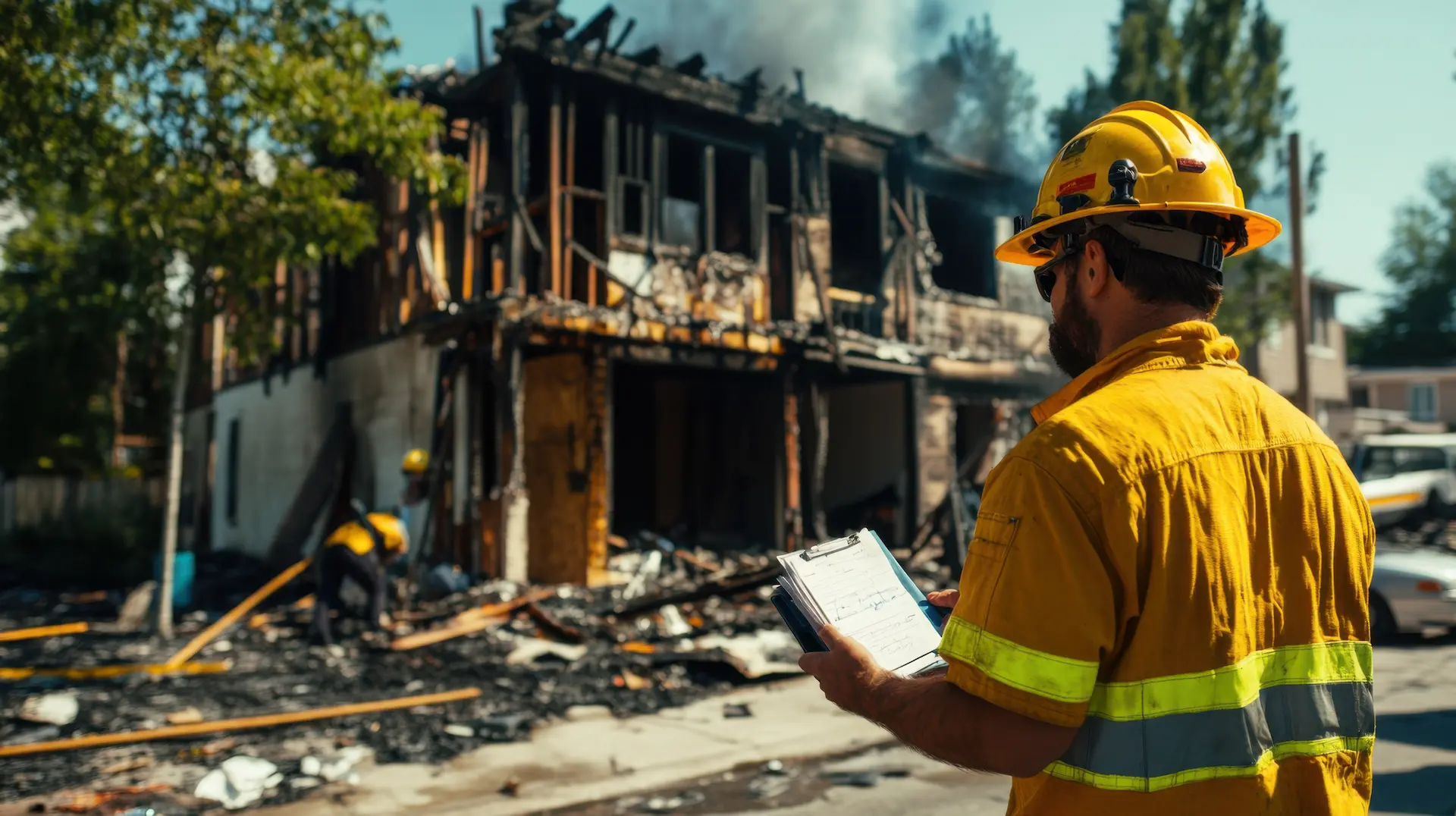
- Every hour closed costs more than the fire. For most businesses the lost revenue and the customers who don't come back outweigh the physical damage. Restoration is planned around reopening, not around convenience.
- Secure the building the same day. Board-up, tarping and site security protect inventory, equipment and the claim. Most commercial policies require it.
- Don't run the HVAC. It spreads soot into every suite and every ceiling plenum.
- Call (877) 631-7576. Live 24/7 answer, a 60-minute arrival guarantee, and a project manager assigned to the loss.
- What it costs: Commercial fire losses range from a few thousand dollars for a contained kitchen fire with smoke cleanup to well into six figures for a structure fire. Fire, smoke and firefighting water are covered perils on virtually every commercial property policy.
How Commercial Fire Restoration Is Different
A house fire has one owner and one adjuster. A commercial fire has tenants, a landlord, a property manager, a commercial carrier with a large-loss adjuster, sometimes a business-interruption claim, and a code official who decides when the building reopens. The restoration company has to manage all of them at once while crews work.
- Phased work to keep operating. We contain and restore the damaged area while unaffected suites, floors or dining rooms stay open where the fire marshal allows.
- After-hours and overnight crews. Restaurants, retail and offices get the loudest and dirtiest work done when they're closed.
- Large-loss documentation. Xactimate scopes, photo logs, moisture logs and inventory documentation built for commercial adjusters and business-interruption claims.
- Code and permits. Reconstruction to current commercial code, permits pulled, inspections scheduled, so reopening is not delayed by paperwork.
- Contents and inventory. Pack-out, inventory, cleaning and climate-controlled storage for equipment, stock, records and electronics.
Commercial Fire Restoration by Property Type
Restaurants and commercial kitchens
Grease and cooking fires, protein smoke residue, hood and duct contamination, dining room smoke, health-department-ready cleanup and rapid reopening.
Offices and professional buildings
Electrical fires, multi-tenant smoke migration through plenums, server rooms and records, after-hours restoration with tenant coordination.
Warehouses and industrial
Large-loss soot cleanup across high-bay space, racking and inventory, forklift and equipment decontamination, structural steel assessment.
Hotels and multifamily
Unit fires that smoke neighboring rooms and corridors, guest and tenant relocation coordination, floor-by-floor restoration.
Retail and shopping centers
Fires that cross demising walls, merchandise pack-out, storefront board-up, phased reopening by suite.
Healthcare, schools and churches
Infection-control and air-quality protocols, containment, documentation for risk management and facility boards.
Our Commercial Fire Restoration Process
- Call (877) 631-7576. Live 24/7 dispatch. A project manager is assigned to the loss on the first call.
- Arrival within 60 minutes, secure and stabilize. Board-up, tarping, site security, utilities secured, structural assessment with the fire marshal's clearance.
- Firefighting water extracted and structure dried. Before it becomes a second loss in the plenum, walls and flooring.
- Documentation and plan. Xactimate scope, photo and moisture logs, contents inventory, and a phased restoration plan reviewed with ownership, the property manager and the adjuster.
- Soot, smoke and odor. Surface-specific soot removal, HVAC and duct cleaning, HEPA air scrubbing, thermal fogging and hydroxyl or ozone treatment.
- Contents and inventory. Pack-out, cleaning, deodorization, document and electronics recovery, storage.
- Reconstruction and reopening. Demolition, rebuild to code, permits and inspections, final air-quality sign-off and handover.
Commercial Fire Restoration Service Areas
Dallas Irving & Las Colinas Richardson & Telecom Corridor Plano, McKinney, Frisco & Collin County Fort Worth, Arlington & Tarrant County Denton County Lewisville Amarillo & the Texas Panhandle Oklahoma City
What Business Owners Say
Verbatim excerpts from public Google reviews of Mr. Restore offices. Names and dates as shown on Google.
“We worked with Wes Bock and his team after a small fire in our warehouse. They were incredibly professional, and went beyond the extra mile in helping us sort everything out. If you’re looking at restoration services, look no further.”
Tim Girgis · Google review · September 2019
“The Team at Mr. Restore helped our office following a fire from a neighbor restaurant. We had equipment set and we were completely dry within 2 business days. Steven even went back on site to make sure our team could remote into our server. Excellent Service!”
Robbie Cox · Google review · November 2018
“We had a significant leak that dumped about 50 gallons of water onto the floor within our building. Mr. Restore was quick to respond and able to get the water out of the floors! Every single person I talked to via phone, email, and in person were extremely kind, polite, understanding, and helpful!”
Cindy Booker · Google review, Amarillo office · April 2023
Why Businesses Choose Mr. Restore
Reopening is the plan
Phased, after-hours and overnight work so the business keeps operating wherever the fire marshal allows.
One project manager, one team
Board-up, drying, soot, contents, permits and rebuild handled by the same company, with one point of contact for ownership, tenants and the adjuster.
IICRC fire and smoke certified
Fire and Smoke Restoration Technician (FSRT), Water Restoration (WRT) and Applied Structural Drying (ASD) on every crew.
Since 2008, family-owned, BBB A+ since 2015
233 Google reviews and a 4.7-star rating across five offices. Read customer reviews.
Commercial Fire Damage FAQ
How fast can you get to my business after a fire?
Within our 60-minute arrival guarantee, 24 hours a day, 365 days a year, across Dallas–Fort Worth, Amarillo and the Texas Panhandle, and the Oklahoma City metro. Crews dispatch from five offices and a project manager is assigned on the first call. Call (877) 631-7576.
Can we keep operating during commercial fire restoration?
Often, yes. Where the fire marshal and code official allow, we contain the damaged area with negative-air barriers and restore it while unaffected suites, floors or dining areas stay open. The loudest and dirtiest work is scheduled after hours or overnight.
Is commercial fire damage covered by insurance?
Fire, smoke and firefighting water damage are covered perils under virtually every commercial property policy, and many policies also carry business-interruption coverage for lost income during restoration. Mr. Restore documents the loss in Xactimate with photo, moisture and inventory logs built for commercial adjusters, and bills the carrier directly.
What does commercial fire restoration cost?
It ranges from a few thousand dollars for a contained kitchen or electrical fire with smoke cleanup to well into six figures for a structure fire with reconstruction. Square footage, the amount of smoke migration, inventory and equipment losses, and code-required upgrades drive the number. We provide a free on-site assessment and a written scope before work begins.
Do you handle the permits and inspections?
Yes. Reconstruction is done to current commercial code, we pull the permits, schedule the inspections and coordinate with the fire marshal on reopening, so the paperwork does not delay the business.
Can smoke odor be removed from a commercial building?
Yes. We clean HVAC systems and ductwork, run HEPA air scrubbing, and use thermal fogging, hydroxyl generators and ozone treatment to neutralize odor molecules embedded in materials. Surface cleaning alone will not remove it.
Related Commercial Services
Fire & smoke damage restoration Smoke damage restoration Commercial water damage restoration Commercial storm damage restoration Contents restoration
Fire at Your Business? Call the Commercial Line.
Live answer 24/7 · 60-minute arrival guarantee · Project manager on the first call · Direct billing to commercial carriers